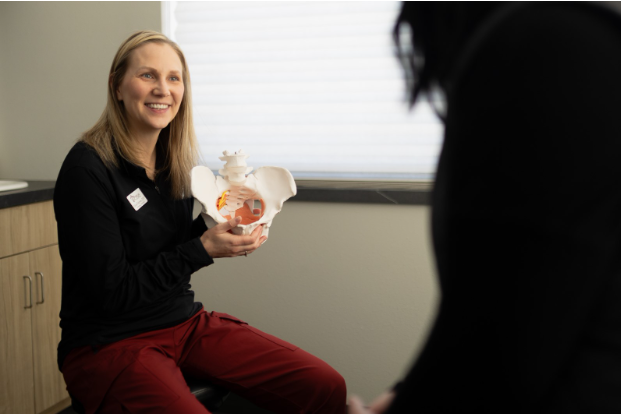
Cesarean sections are major abdominal surgeries, and recovery often involves more than many women expect. Healing is not just about the incision. Your core strength, posture, and overall stability are all affected by both pregnancy and the procedure itself.
Many women benefit from pelvic floor physical therapy after a C-section to safely rebuild core strength and improve overall function.
At Optimum Therapies, our pelvic health specialists in Lake Hallie, Rice Lake, and Mandan work with women at all stages of postpartum recovery. One of the most common things we hear is, “I didn’t realize how much my core was affected.” This is especially common after a C-section, since the focus is often placed on incision healing rather than overall core recovery.
While rest is important, it is not always enough on its own. Guided pelvic floor physical therapy helps your body heal properly and rebuild strength in a safe, progressive way.
How a C-Section Affects Your Core
Your core is made up of your pelvic floor, deep abdominal muscles, diaphragm, and lower back. These systems work together to support movement, breathing, and stability.
During pregnancy, these muscles stretch and adapt. A C-section adds another layer of stress, as the abdominal wall is surgically opened and repaired.
Even without a vaginal delivery, your pelvic floor is still affected by pregnancy and plays a key role in recovery. After a C-section, it is common to experience:
- Core weakness or instability
- Difficulty engaging abdominal muscles
- Lower back or pelvic pain
- Postural strain, especially while feeding or carrying your baby
- Abdominal separation (diastasis recti)
Why Pelvic Floor Physical Therapy Matters After a C-Section
A C-section is a surgical procedure, and your body benefits from structured rehabilitation just like it would after any other surgery. Early, guided movement is commonly recommended to support healing and reduce complications after surgery.
Pelvic floor physical therapy is a non-surgical, whole-body approach that focuses on restoring strength, coordination, and function across your core and pelvic system.
At Optimum Therapies, we combine hands-on manual therapy with movement-based rehabilitation, including Pilates-based techniques, to help you rebuild strength in a way that feels natural and sustainable. Treatment may also include breathing work, strengthening, and education so you can continue progressing outside of the clinic on your own.
Physical therapy can help:
- Rebuild deep core strength
- Improve posture and alignment
- Reduce pain in the abdomen, back, or pelvis
- Help improve bladder and bowel control
- Support long-term recovery and prevent future issues
How Physical Therapy Supports Your Recovery
Recovery looks a little different for everyone, but there are a few key ways physical therapy supports the process.
Reconnecting to Your Core
After a C-section, many women feel disconnected from their core muscles. Therapy often begins with breathing work and gentle activation to reconnect your diaphragm, abdominal muscles, and pelvic floor.
This foundation helps regulate pressure in your body and creates stability for movement. Pilates-based rehabilitation is often used to improve control, coordination, and endurance without placing unnecessary strain on healing tissues.
Addressing Scar Tissue
Scar tissue is a normal part of healing, but it can create tightness, sensitivity, or restricted movement if not addressed.
Our therapists use gentle manual therapy techniques to improve scar mobility and reduce discomfort. Improving how the tissue moves can help restore normal muscle function and reduce pulling or tightness in the abdomen.
Restoring Strength Safely
Returning to exercise too quickly can slow recovery or increase discomfort. Physical therapy provides a structured progression based on how your body is healing.
We focus first on deep stabilizing muscles, then gradually progress to more dynamic strength and movement. This is especially important when addressing diastasis recti and rebuilding full core function.
Improving Daily Movement
Daily activities like lifting your baby, getting out of bed, or carrying a car seat can place unexpected stress on your body.
We help you learn how to move in ways that support your core and reduce strain on healing tissues. Small changes in movement can significantly improve comfort throughout the day.
When to Start Pelvic Floor Therapy After a C-Section
Many women begin pelvic floor physical therapy around 4 to 6 weeks postpartum, once cleared by their provider.
However, it is never too late to start. Whether you are weeks, months, or even years postpartum, therapy can still help improve strength, reduce pain, and restore function.
Pelvic Floor Physical Therapy for a Stronger Recovery
C-section recovery can feel overwhelming, especially while adjusting to life with a newborn. With the right support, your body can regain strength, stability, and confidence over time.
At Optimum Therapies, our pelvic health team in Lake Hallie, Rice Lake, and Mandan provides individualized care that combines manual therapy, guided movement, and Pilates-based rehabilitation. Our goal is to help you return to daily activities safely and feel comfortable in your body again.
If you are experiencing weakness, discomfort, or difficulty returning to normal movement after a C-section, pelvic floor physical therapy can help.
Learn more about our pelvic health services here: https://optimumtherapies.com/physical-therapy/pelvic-floor-therapy/
If you are dealing with weakness, discomfort, or uncertainty about your recovery, contact Optimum Therapies today to schedule an evaluation and see if we are the right fit for you.