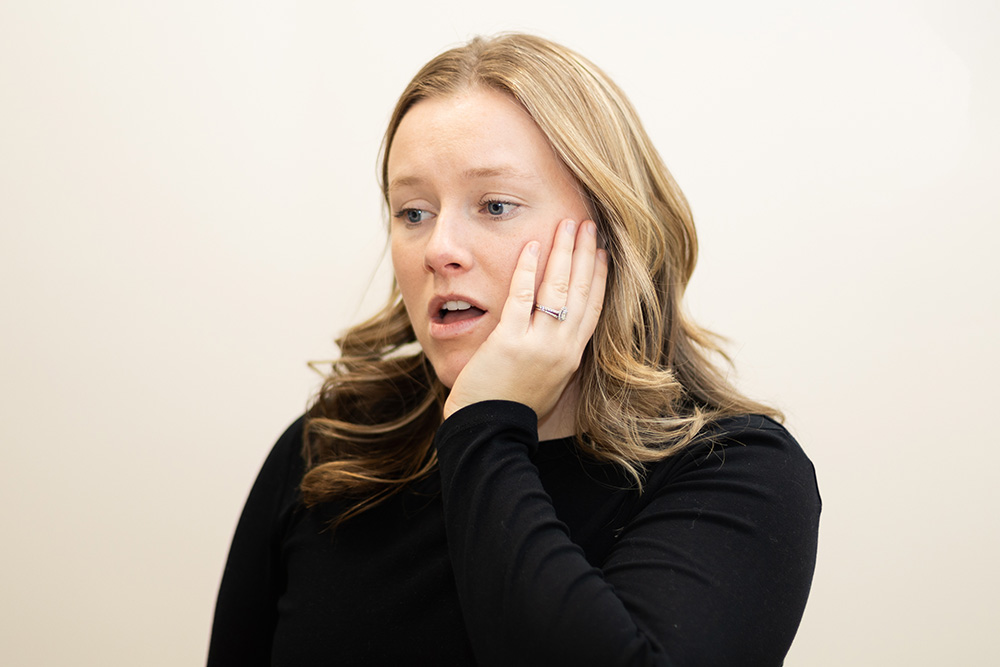
Jaw pain, clicking, and frequent headaches can make everyday things like eating and talking uncomfortable. Targeted therapy can ease tension in the jaw and surrounding muscles, helping you find lasting relief.
Did you know?
TMJ dysfunction doesn’t always cause jaw pain.
Many people with TMJ dysfunction experience headaches, neck pain, ear pain or pressure, ringing in the ears (tinnitus), facial pain, or difficulty chewing without realizing their symptoms may be related to their jaw.
If you’ve been living with these symptoms, a physical therapy evaluation may help identify whether your TMJ is contributing to your discomfort.
What is TMJ Dysfunction?
The temporomandibular joint (TMJ) connects your jaw to your skull and allows you to speak, chew, yawn, and move your mouth comfortably.
When the temporomandibular joint or the surrounding muscles aren’t functioning properly, it can lead to temporomandibular joint dysfunction (TMJ or TMD). Problems with the jaw joint often affect more than just the jaw, contributing to symptoms in the face, head, neck, and ears.
Physical therapy focuses on identifying factors contributing to your symptoms and restoring normal movement through individualized treatment.
Common Signs and Symptoms
Jaw Pain
Pain around the jaw joint or facial muscles.
Tooth Wear
Asymmetrical tooth wear indicating nighttime grinding.
Clicking or Popping
Clicking, popping, or grinding when opening or closing your mouth.
Difficulty Opening Your Mouth
Limited jaw movement or your jaw feeling “stuck.”
Headaches
Frequent headaches, especially around the temples or jaw.
Ear Pain or Ringing
Ear discomfort, pressure, ringing (tinnitus), or a feeling of fullness without an ear infection.
Neck and Facial Pain
Pain, tightness, or muscle tension extending into the face, neck, or shoulders.
What Causes TMJ Dysfunction?
TMJ dysfunction can develop for many different reasons, and often more than one factor contributes to symptoms.
Common causes include:
- Jaw clenching or teeth grinding (bruxism), including during sleep
- Muscle tension
- Neck pain
- Injury or trauma
- Arthritis affecting the jaw joint
- Stress-related muscle tightness
- Poor posture
- Previous dental procedures
- Dysfunctional jaw movement patterns
How Physical Therapy Can Help
Physical therapy focuses on addressing the factors contributing to your symptoms, not just relieving pain.
Manual Therapy
Hands-on treatment may be used to improve jaw mobility, reduce muscle tension, and address restrictions in the jaw, neck, and surrounding soft tissues.
Dry Needling (When Appropriate)
When appropriate, dry needling may be used to reduce muscle tension, relieve trigger points, and improve mobility in the jaw, face, and neck. Your physical therapist will determine if it’s appropriate based on your symptoms and evaluation.
Therapeutic Exercise
Personalized exercises help improve jaw strength, coordination, stability, and movement while restoring normal function.
Postural Training
Poor posture can contribute to jaw pain and muscle tension. We’ll assess your posture and provide strategies to improve alignment and reduce stress on the jaw and neck.
Movement Retraining
Learn healthier movement patterns for chewing, talking, yawning, and other daily activities to reduce strain on the jaw joint.
Home Exercise Program
You’ll receive individualized exercises and self-management strategies to continue your progress between visits and help prevent future flare-ups.
Our Approach
Proper TMJ function requires the jaw, neck, and surrounding muscles to work together.
That’s why our physical therapists perform a comprehensive evaluation to identify contributing factors, rather than focusing only on where you feel pain.
Your treatment may include a combination of manual therapy, therapeutic exercise, dry needling when appropriate, movement retraining, postural education, and a personalized home exercise program to address the underlying cause of your symptoms.
What to Expect
Your treatment begins with understanding the cause of your symptoms, not just where you feel pain.
Comprehensive Evaluation
Your physical therapist will evaluate your jaw movement, muscle function, posture, neck mobility, and surrounding structures to identify factors contributing to your symptoms. We’ll also discuss your medical history, daily habits, and goals for treatment.
Personalized Treatment Plan
Based on your evaluation, we’ll create an individualized treatment plan that may include manual therapy, dry needling when appropriate, therapeutic exercise, movement retraining, and education to improve jaw function and reduce pain.
Progressive Treatment
As your symptoms improve, your treatment will progress to restore comfortable movement, improve strength and coordination, and help you return to normal daily activities.
Long-Term Self-Management
You’ll receive home exercises, education, and strategies to help manage symptoms and reduce the likelihood of future flare-ups.
Why choose Optimum Therapies?
Personalized care focused on finding the source of your jaw pain.
TMJ dysfunction is often influenced by more than just the jaw itself. Our physical therapists take a comprehensive approach by evaluating how your jaw, neck, posture, and surrounding muscles work together to identify the underlying cause of your symptoms.
Using evidence-based treatment techniques and individualized care, we’ll help you reduce pain, restore comfortable movement, and get back to eating, speaking, and living with greater confidence.
Frequently Asked Questions
Do I need a referral for physical therapy?
Many patients in Wisconsin and North Dakota can begin physical therapy without a referral through Direct Access. However, some insurance plans may still require a referral for coverage. Our team will verify your benefits before your first appointment whenever possible.
Do I need to see a dentist before starting physical therapy?
Not necessarily. In many cases, you can begin with a physical therapy evaluation. If your symptoms suggest you would benefit from evaluation by a dentist, oral surgeon, or another healthcare provider, we’ll help guide you to the appropriate provider and coordinate your care when needed.
Can physical therapy help TMJ dysfunction?
Yes. Physical therapy is a conservative, evidence-based treatment option for many people with TMJ dysfunction and may help reduce pain, improve jaw mobility, decrease muscle tension, and restore normal function.
Can TMJ dysfunction cause headaches or ear pain?
Yes. TMJ dysfunction can contribute to headaches, facial pain, neck pain, ear pain, ringing in the ears (tinnitus), or a feeling of fullness in the ear. These symptoms may occur because the jaw joint and surrounding muscles are closely connected to the head and neck.
What causes my jaw to click or pop?
Clicking or popping can occur for several reasons, including muscle tightness, movement dysfunction, or changes within the jaw joint. While clicking isn’t always painful, it may be worth evaluating if it’s accompanied by pain, limited movement, or difficulty chewing.
Is dry needling effective for TMJ dysfunction?
For some patients, yes. Dry needling may help reduce muscle tension, relieve trigger points, and improve mobility in the jaw, face, and neck. Your physical therapist will determine whether it’s appropriate based on your evaluation and treatment goals.
How long does treatment take?
Recovery varies depending on the cause and severity of your symptoms. After your evaluation, your physical therapist will discuss your recommended plan of care and expected progression.
Will I have exercises to do at home?
Yes. Home exercises and self-management strategies are an important part of treatment and help reinforce your progress between visits while supporting long-term improvement.

Content reviewed by Kyle Vande Hei, PT, DPT at Optimum Therapies.